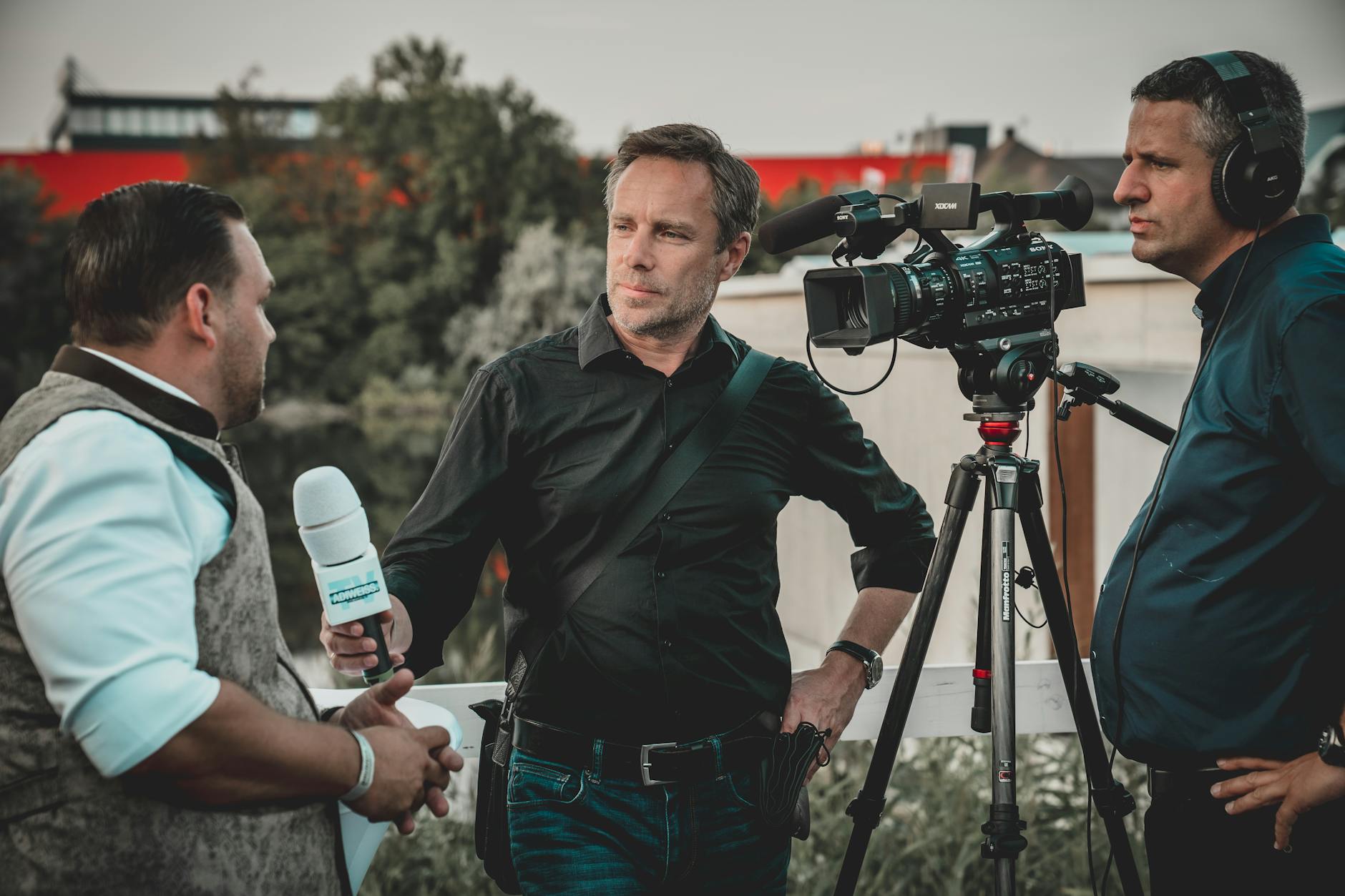
Interviews are a cornerstone of video production, adding a human element and fostering connection with viewers in documentaries, news reports, explainer videos, and more. But conducting a captivating interview goes beyond simply asking questions. It requires a skilled interviewer who can create a comfortable space, draw out insightful responses, and capture the essence of the interviewee’s perspective.
In this guide, we’ll delve into the art of interviewing, equipping you with techniques to elevate your video productions:
Pre-Production: Laying the Groundwork
- Research is Key: Before hitting record, immerse yourself in the topic and the interviewee’s background. Research allows you to formulate insightful questions, anticipate potential responses, and guide the conversation towards valuable information.
- Crafting Compelling Questions: Don’t settle for generic questions. Craft open-ended inquiries that encourage elaboration and in-depth responses. Use follow-up questions to delve deeper and explore nuances.
- Develop a Question Flow: Organize your questions in a logical sequence that builds upon each other. This ensures the interview has a clear direction and covers all your key points.
- Know Your Interviewee: Research the interviewee’s communication style, expertise, and potential sensitivities. Adapt your questions and approach accordingly.
Setting the Stage: Creating a Positive Atmosphere
- Location, Location, Location: Choose a quiet, distraction-free location with good lighting and audio quality. Consider the interview style – a formal setting for a business interview, a more relaxed environment for a personal story.
- Building Rapport: Greet your interviewee warmly and take some time for informal conversation to establish a connection. This puts them at ease and fosters a more open and honest dialogue.
- Explain the Process: Briefly outline the interview format, expected duration, and how the footage will be used. This transparency builds trust and ensures the interviewee feels comfortable.
During the Interview: Mastering the Flow
- Active Listening is Crucial: Pay close attention to the interviewee’s responses, both verbal and nonverbal. Listen actively to understand their perspective and tailor your follow-up questions accordingly.
- Nonverbal Communication: Maintain positive eye contact, and use body language that conveys attentiveness and respect. Avoid fidgeting or distracting movements.
- Let Them Speak: Resist the urge to interrupt or finish their sentences. Give the interviewee space to elaborate and express their thoughts fully.
- Clarifying Questions: Don’t be afraid to ask clarifying questions to ensure you understand their point. This demonstrates active listening and helps avoid potential misunderstandings.
Advanced Techniques for Engaging Interviews
- The Art of Silence: Don’t feel pressured to fill every pause. Strategic silence can encourage the interviewee to elaborate on their thoughts or provide additional details.
- Using Storytelling Techniques: Encourage interviewees to share personal anecdotes or stories that illustrate their points. This creates a more engaging narrative for viewers.
- Asking Challenging Questions: Don’t shy away from thought-provoking questions that challenge the interviewee’s perspective. This can lead to insightful and thought-provoking responses.
- Visual Aids (Optional): For certain interviews, consider incorporating visuals like photographs, documents, or video clips to spark conversation and refresh the interviewee’s memory.
Post-Production: Capturing the Essence
- Review and Edit: Carefully review the interview footage, identifying the most compelling and informative segments. Edit the interview to create a cohesive narrative flow that aligns with your video’s overall message.
- B-Roll Integration: Enhance the interview by intercutting B-roll footage that visually complements the interviewee’s points. This adds visual interest and reinforces the key takeaways.
Additional Tips for Success
- Practice Makes Perfect: Hone your interviewing skills by practicing with friends or colleagues. Record yourself asking questions and analyze your strengths and weaknesses.
- Embrace the Unexpected: Be prepared for the interview to take an unexpected turn. Remain flexible and adapt your questions to maintain a natural flow of conversation.
- Develop Your Interview Style: Over time, you’ll develop your unique interviewing style. Don’t be afraid to experiment and find your voice.
Conclusion: The Power of Compelling Interviews
Mastering the art of interviewing empowers you to capture insightful stories, diverse perspectives, and valuable information for your video productions. By implementing these techniques, you can transform your interviews from basic Q&A sessions to engaging and thought-provoking segments that captivate your audience. Remember, the key lies in thorough preparation, creating a comfortable environment, and actively listening to draw out the best from your interviewees. So, the next time you pick up a camera, remember the power of a well-conducted interview to elevate your video content and leave a lasting impression on your viewers.
Bonus: Interviewing for Different Video Formats
While the core interviewing techniques remain consistent, adapting your approach to specific video formats can further enhance your content:
- Documentary Interviews: In documentaries, interviews act as cornerstones for storytelling. Use open-ended questions to elicit personal stories and perspectives that enrich the documentary’s narrative.
- News Interviews: News interviews prioritize timeliness and clarity. Focus on concise questions that draw out key information relevant to the current event.
- Explainer Video Interviews: Explainer video interviews aim to educate viewers on a specific topic. Craft questions that guide the interviewee to break down complex concepts into easily digestible information.
By understanding the unique demands of each format, you can tailor your interviewing style to deliver the most impactful content for your audience.
Ready to Take Action?
The world is brimming with stories waiting to be told. With the skills and techniques outlined in this guide, you’re well-equipped to embark on your interviewing journey. Remember, practice makes perfect, so grab your camera, start conducting interviews, and witness the power of compelling conversations come alive in your video productions!
Leave a Reply